Where Difference Thrives
Unmasking Nature is an evolving, multi-part project led by AlanJames Burns exploring sensory stimulation and the diverse ways people connect to the natural world around us.
Our society, which often demands conformity, causes many people to mask their true selves. Being in nature offers radical relief: acceptance without judgment and unconditional belonging.
Just as biodiversity flourishes when given space to grow, many neurodivergent people thrive in freedom. The project draws parallels between the two, and asks you to embrace neurodiversity as biodiversity.
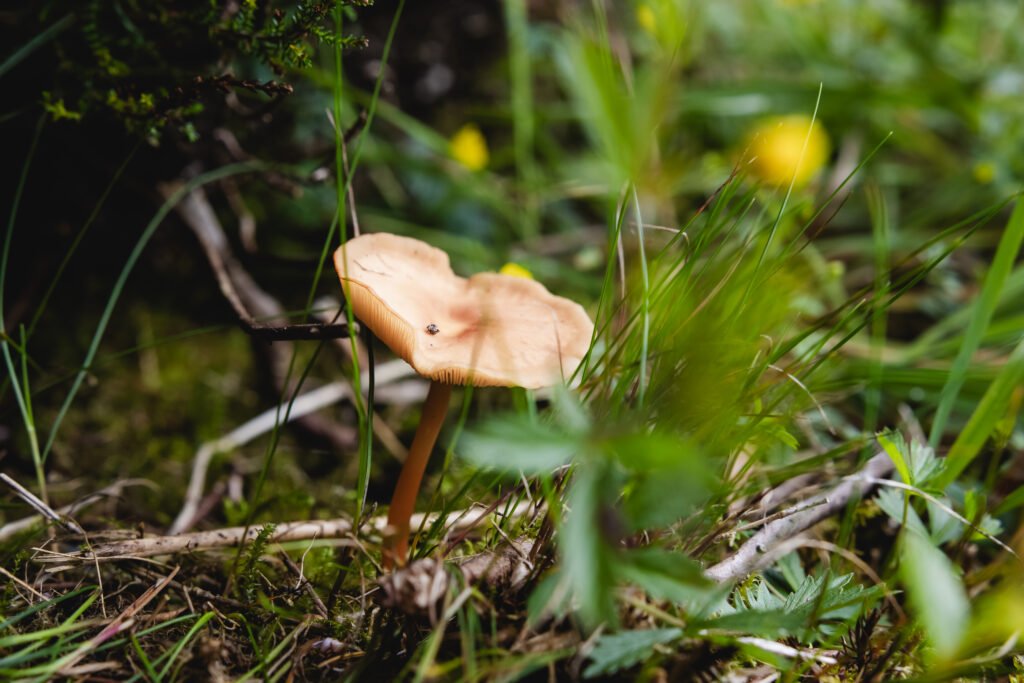
Every tangle of roots, mossy stone and blooming dandelion is not just a biodiversity success signal, but a metaphor for the vibrancy of neurodiversity.
Biodiversity is Neurodiversity
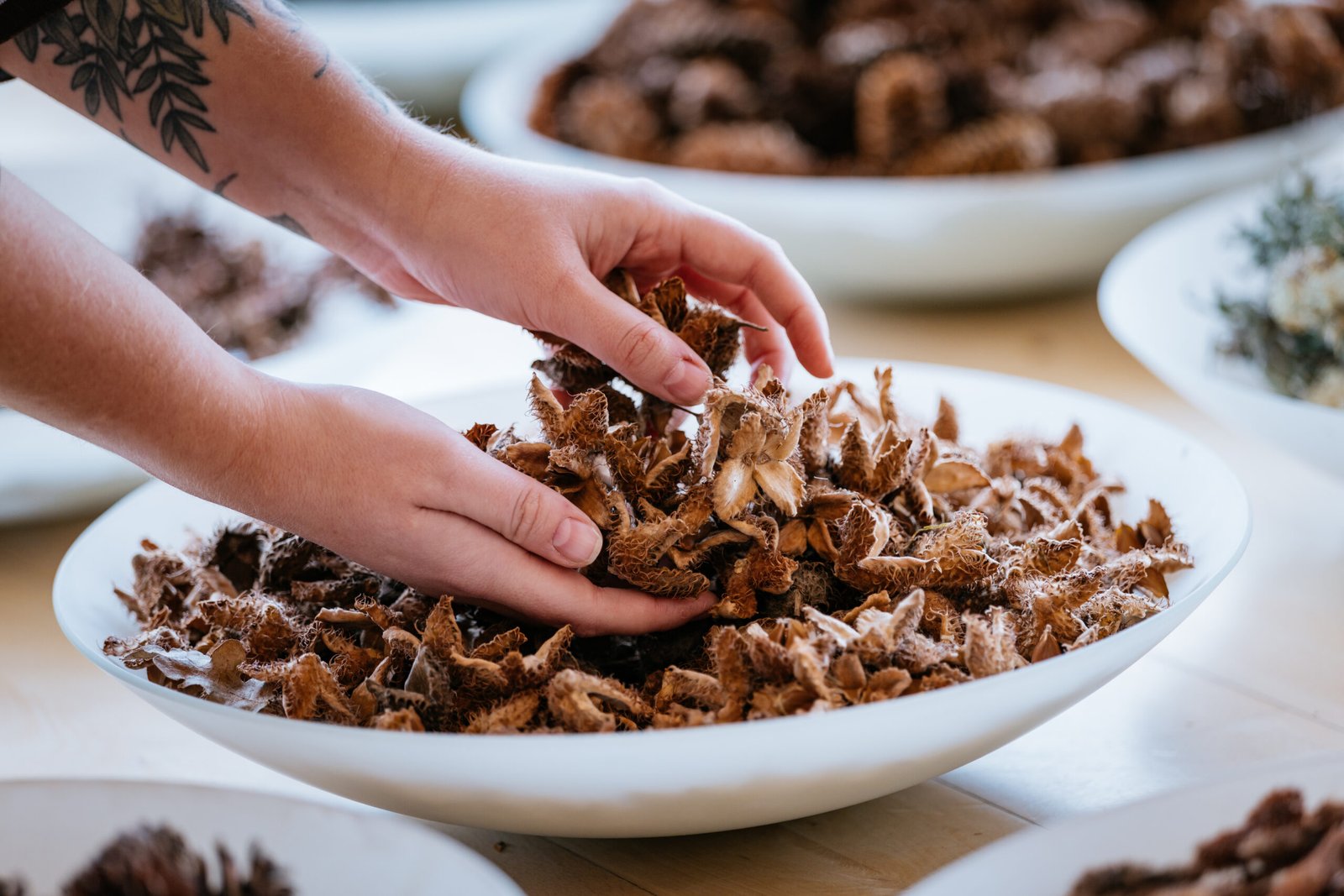
Unmasking Nature draws parallels between biodiversity and neurodiversity, highlighting how patterns in nature reflect neurodivergent ways of moving through the world. Just like animals and plants, neurodivergent brains often need a quiet moment to process inputs, react and adapt when their senses can’t make sense of their surroundings.
The Mimosa pudica (Sensitive Plant), offer one example. When touched or shaken, their leaves curl inward into a tight scroll. This sensory response, called thigmonasty, is a way of protecting the plant from external stress. Like the Mimosa pudica, sometimes withdrawing, pausing or finding a quieter space can be a natural response to sensory overwhelm.
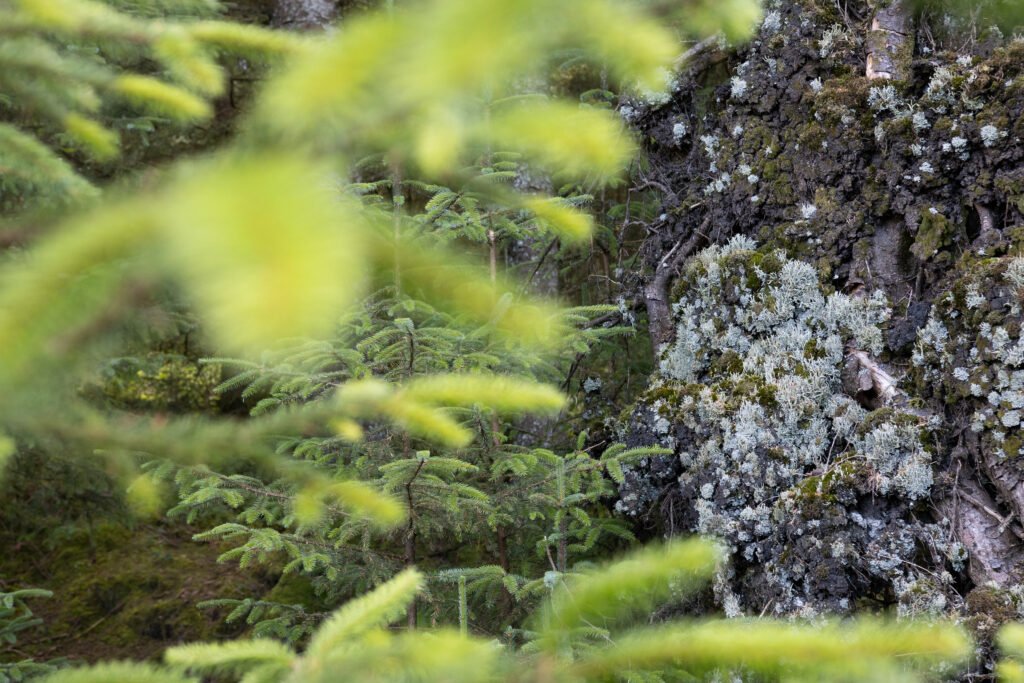
Lichen offers another perspective. Formed through a symbiotic relationship between fungi and algae, lichen grows quietly and thrives through creating a community. Like lichen, neurodivergent people can benefit from forming their own communities and coming together to support one another. Society can benefit from ensuring that neurodivergent people are represented across all communities.
Burrow. Stim. Fidget.
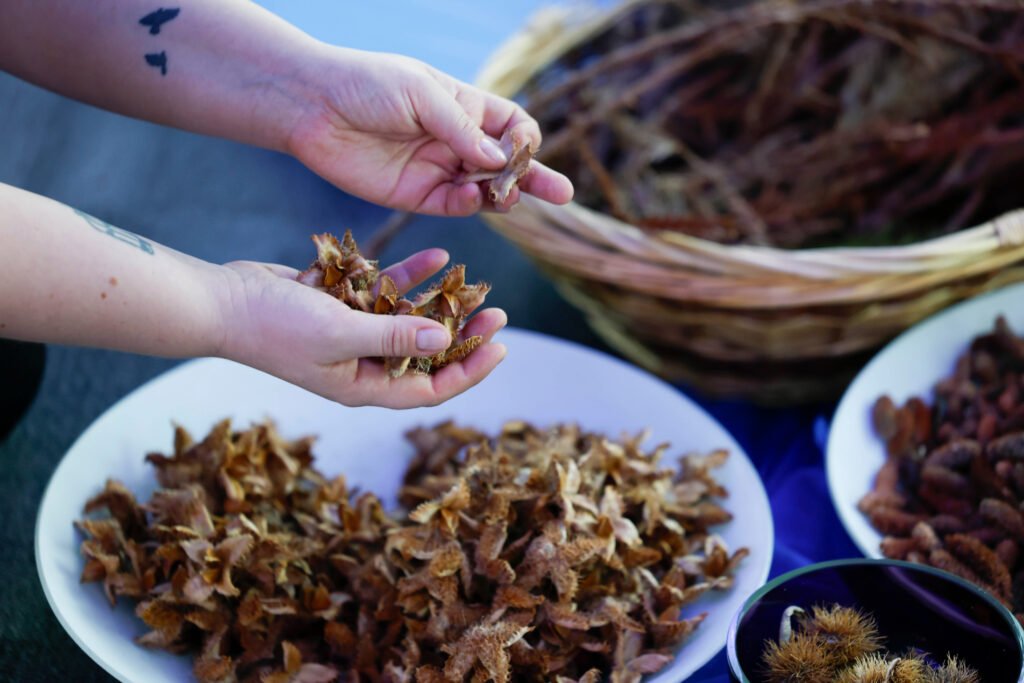
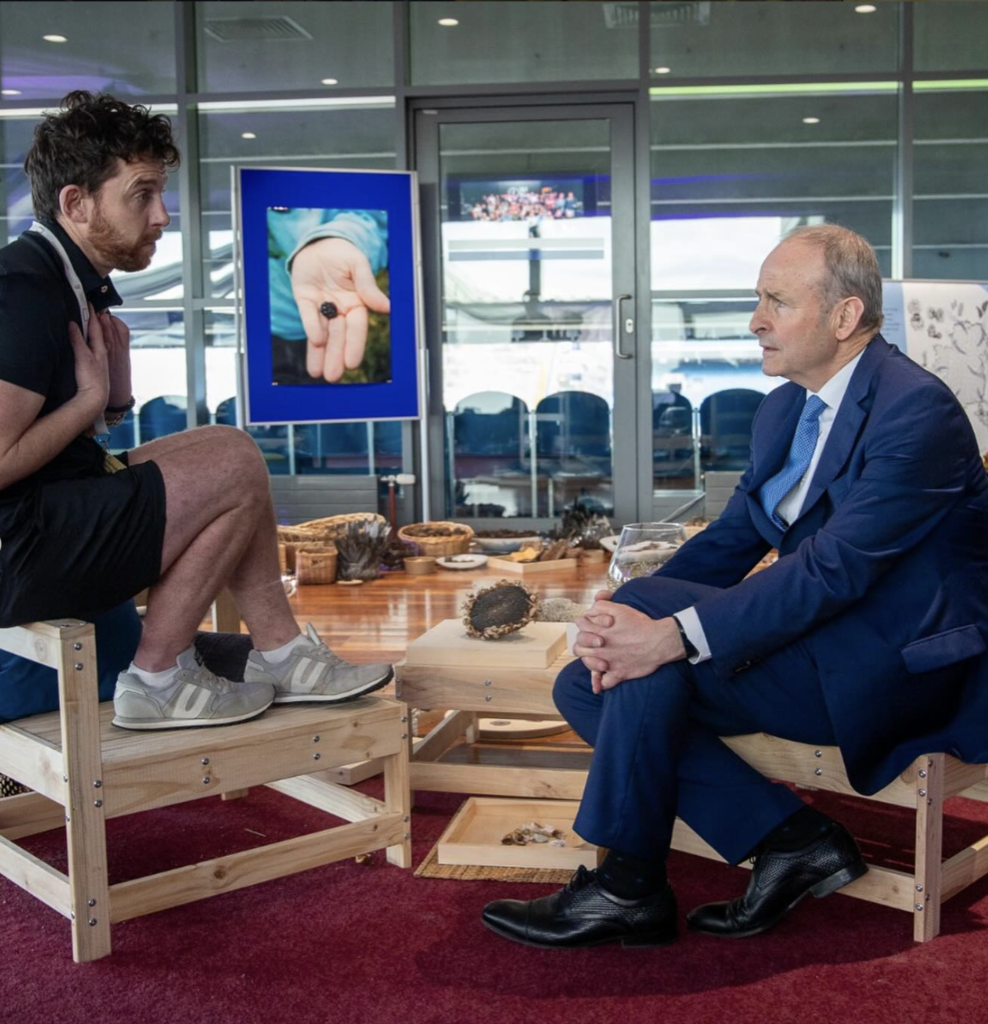
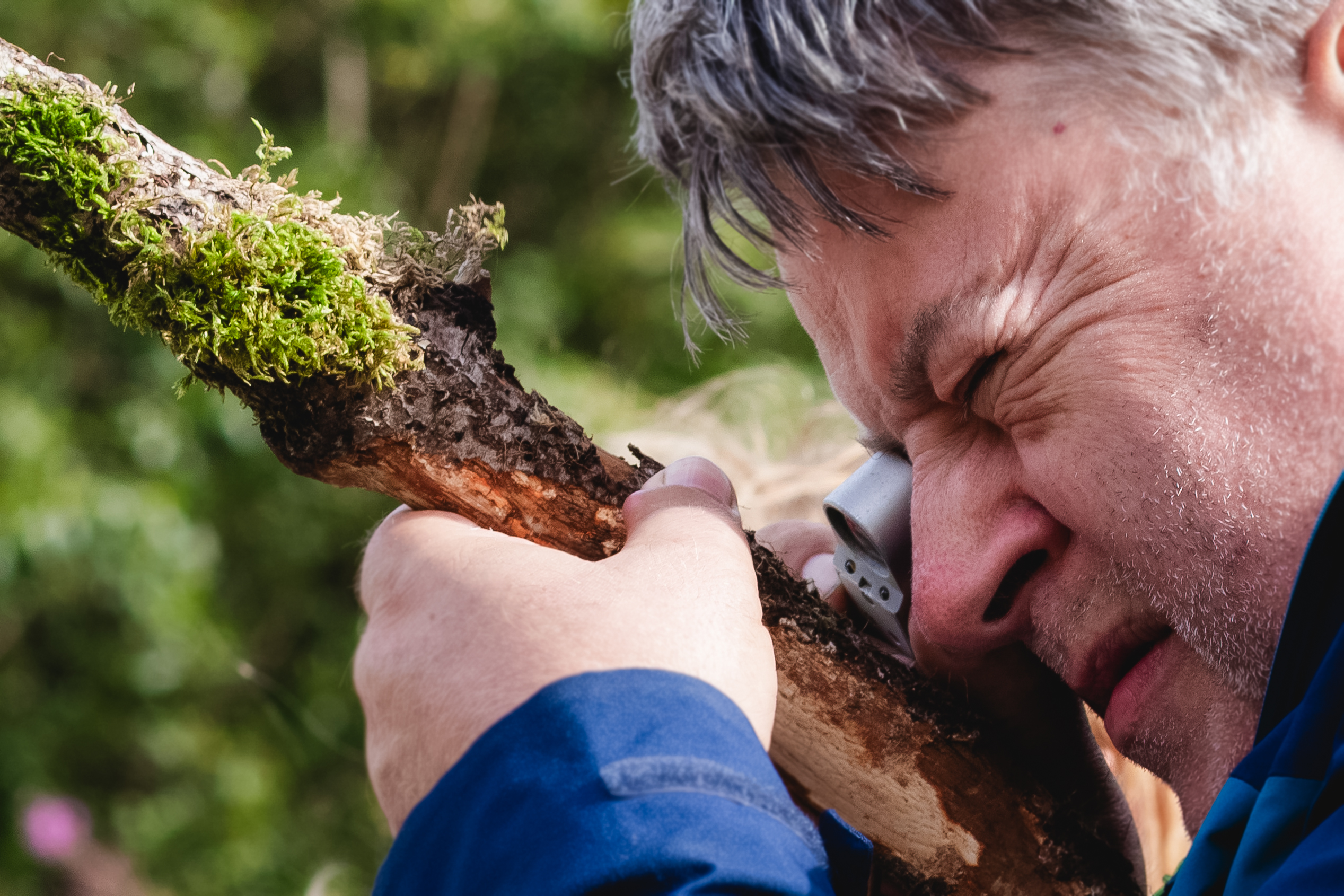
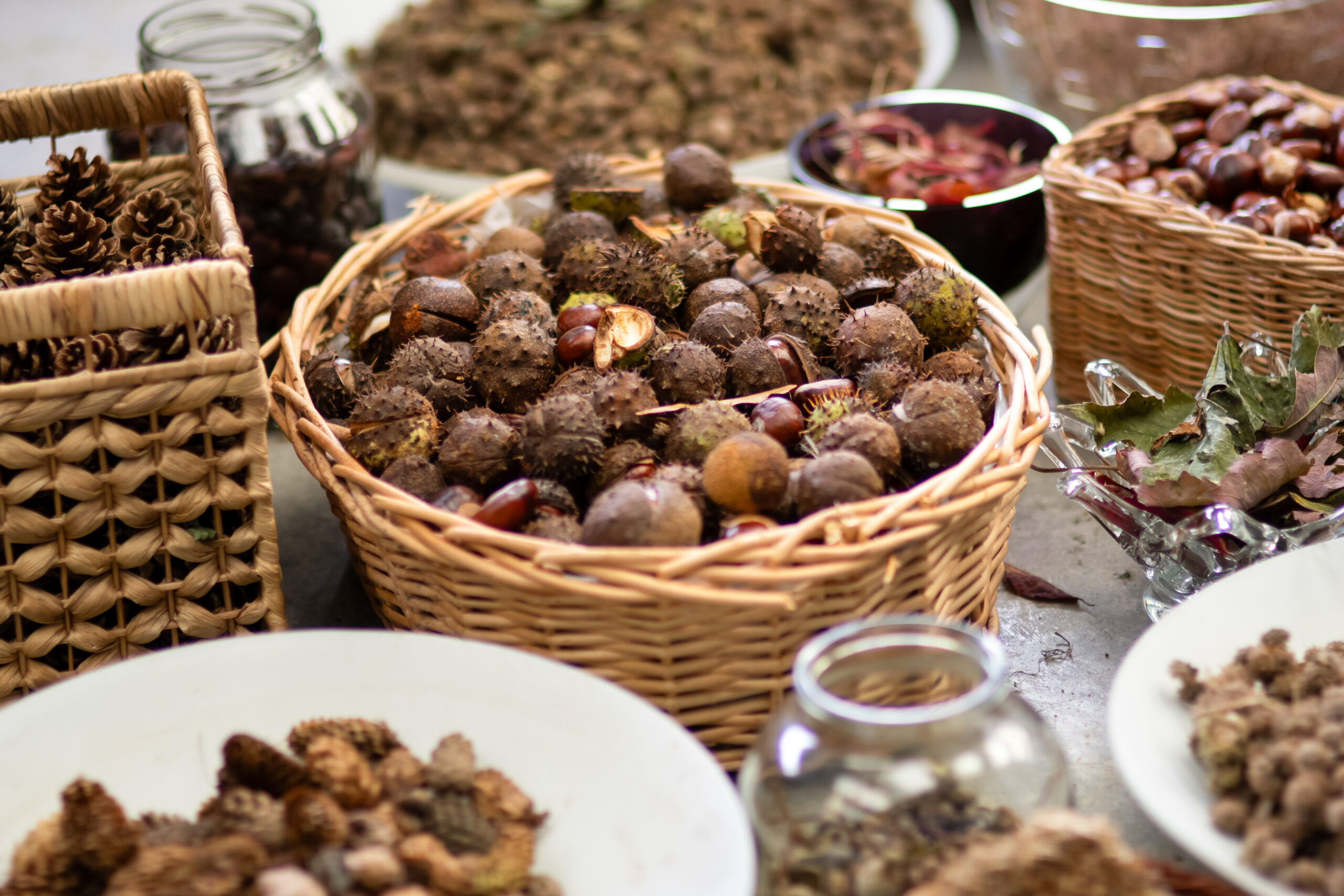
The Unmasking Nature Sensory Burrow is a feast for the senses. Foraged from the rich biodiversity of Ireland for the diverse ways people connect to the world around us.
Within the Burrow you’ll experience a multi-sensory trove of nature’s abundant offerings that can support sensory exploration, regulation and calm.
By embracing feel-good, intuitive explorations, Unmasking Nature is your sanctuary for restoration – a place to rewild, unmask and let your curious senses guide you.
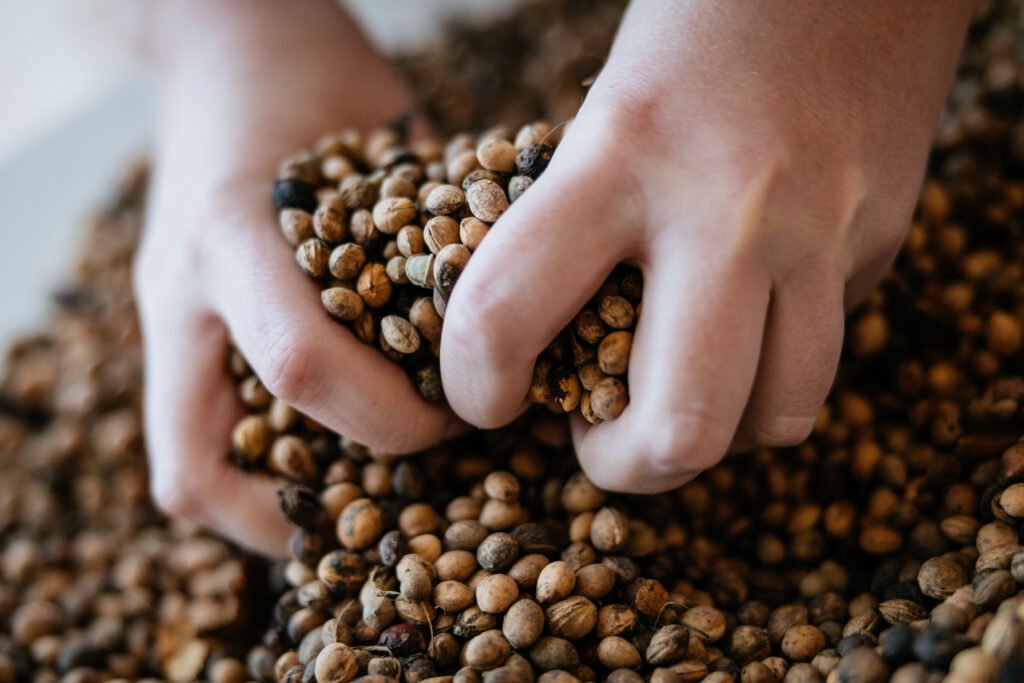
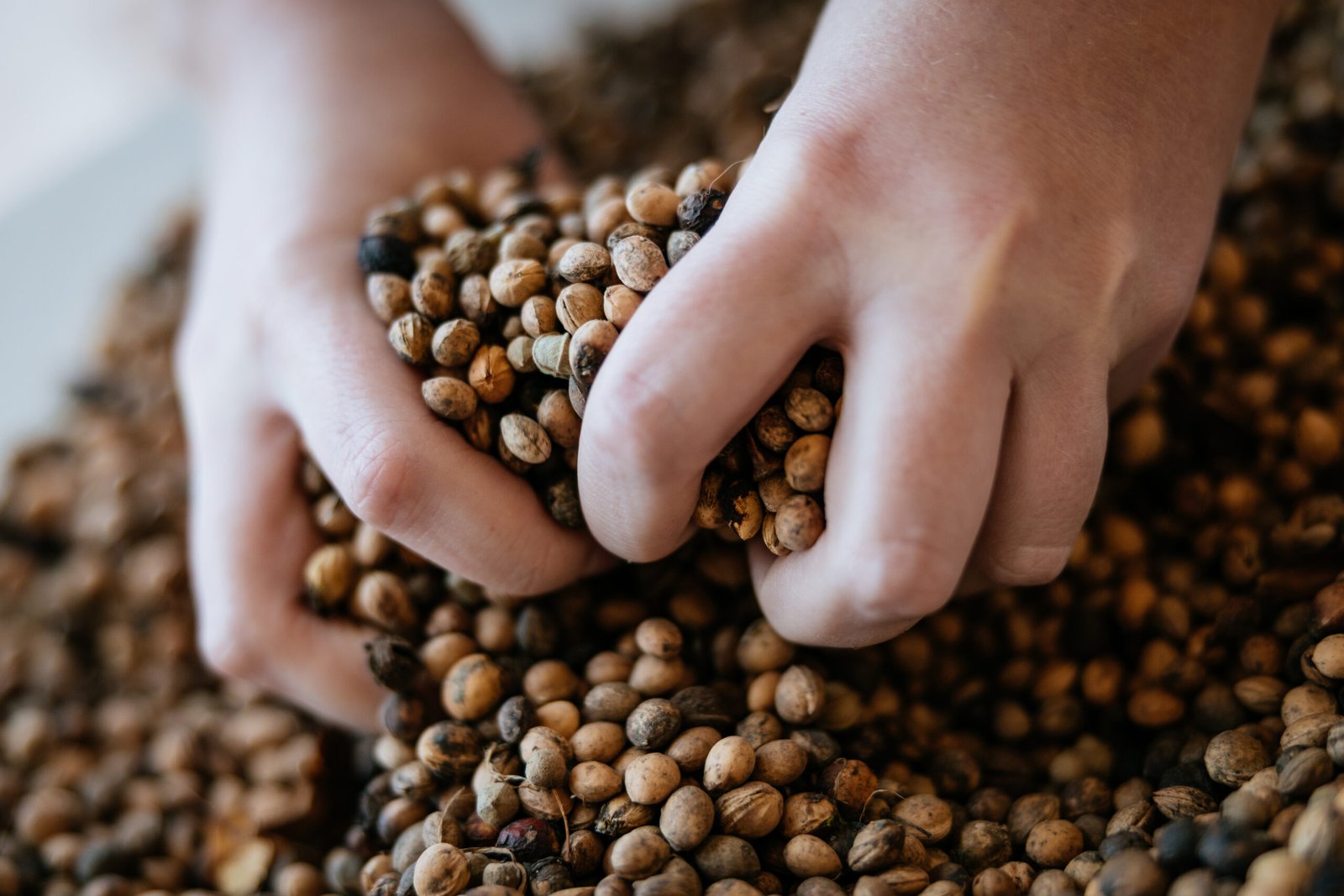
Feel the temperature change as you dig your hands deep into a bowl of acorns.
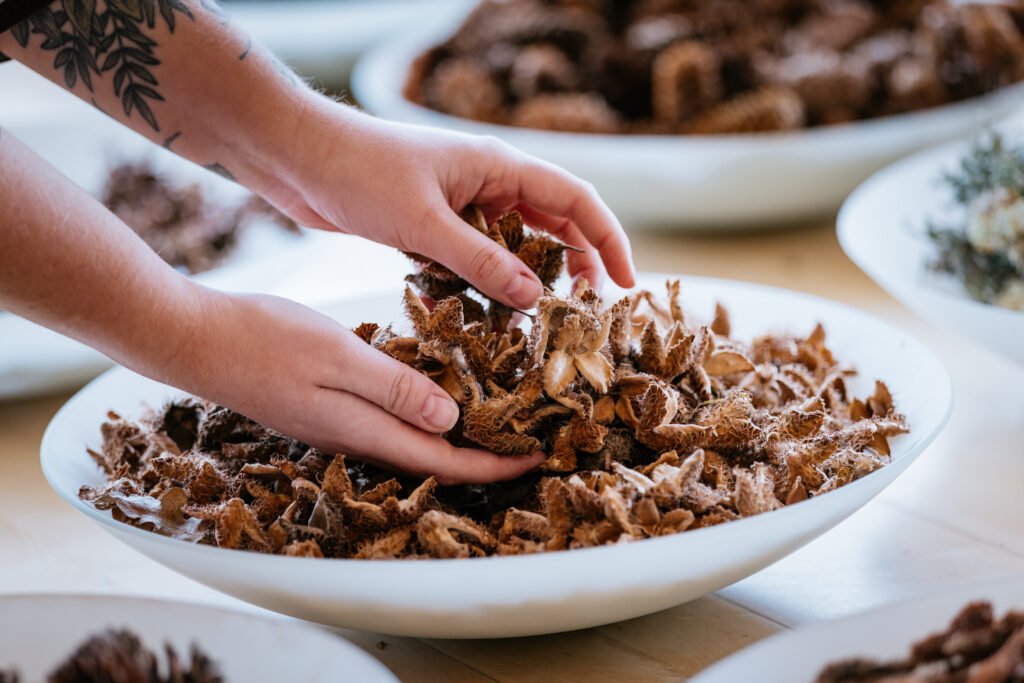
Listen to a pinecone’s tune as you run your fingers over its ridges.
Pick up a leaf and wander through the map of its veins.
Find the perfect stone, and turn your focus to how it feels in your hand.
These are some examples of stimming.
What is Stimming
Stimming, short for self-stimulatory behaviour, refers to physical movements, sounds or actions that people use to help regulate their emotions and sensory input. There are many different types of stimming behaviours:
Auditory stimming: involves making, listening to or seeking out sounds. For example, humming, listening to the sound of running water, or repeating certain words, phrases or noises.
Olfactory stimming: have to do with your sense of smell. They include sniffing different items around you, repeatedly smelling the same item or seeking out a specific scent, like a favourite flower, moss or freshly cut grass.
Oral or gustatory stimming: involves using your mouth to get sensory input, like licking or chewing a pencil or your shirt, or seeking out items with specific textures. Gustatory stims are specifically related to taste. You may, for example, seek out a specific food or flavour.
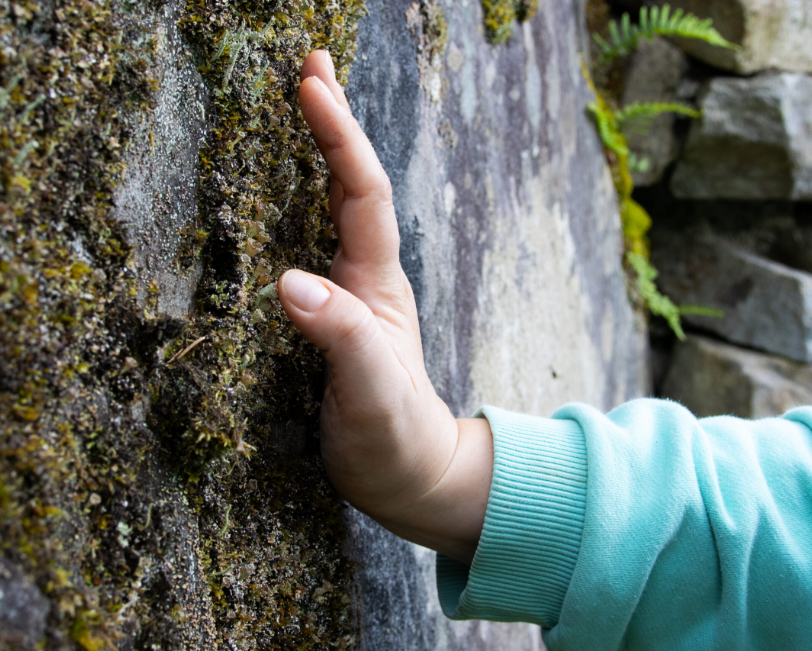
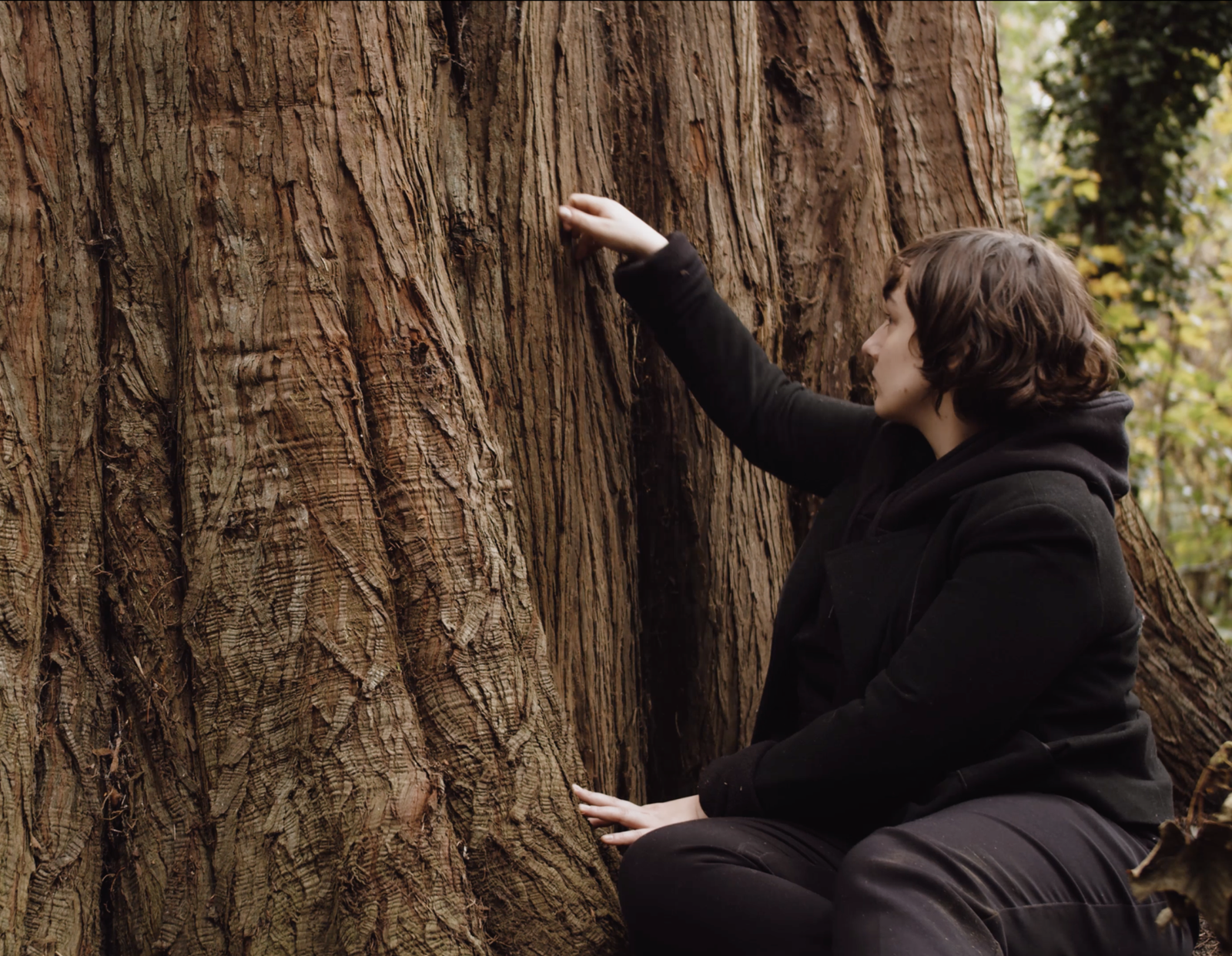
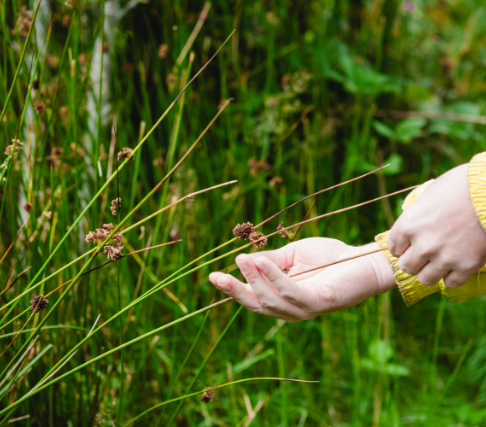
Tactile stimming: are repeated actions that involve touch, such as running your hands over tree bark, stroking leaves, rubbing stones between your fingers or touching different natural textures.
Visual stimming: is sight-related, meaning how you use your eyes and the things you look at. Examples would be rolling your eyes, following insects or gazing at trees from the roots to the top of the branches.
Vestibular stimming: involves moving your body. This may take the form of rocking, spinning, hand-flapping, and swaying like nearby trees.
Stimming with Nature
For neurodivergent people, spaces that allow for stimming can be especially beneficial, while spending time in nature can support the nervous system to restore balance and wellbeing. Unmasking Nature marries the two, inviting us to experience nature as a sensory landscape—a place to stim, regulate, explore and restore without the need to mask.
Unmasking Nature offers an alternative to clinical sensory environments filled with manufactured plastic stim tools. Instead, the installation uses natural materials gathered through ethical foraging practices, creating a sensory experience that connects us with nature while considering the environmental impact of the materials we use. If these materials are ever discarded, they can return to nature, breaking down naturally and becoming part of the earth once again.
From Connection to Custodianship
The more deeply we connect with the natural world, the more we come to understand, value and care for it. By engaging with nature through our senses, Unmasking Nature invites us to notice the richness and complexity of the living world around us — developing curiosity, knowledge and a sense of belonging within it.
When we recognise ourselves as part of nature, rather than separate from it, we begin to understand our role in protecting the places and ecosystems we depend upon. Unmasking Nature encourages us to become custodians of the natural world — to nurture biodiversity and help create the conditions for life to thrive.
Protecting the biodiversity of the world protects the neurodiversity of the world.
“Nothing About Us Without Us”
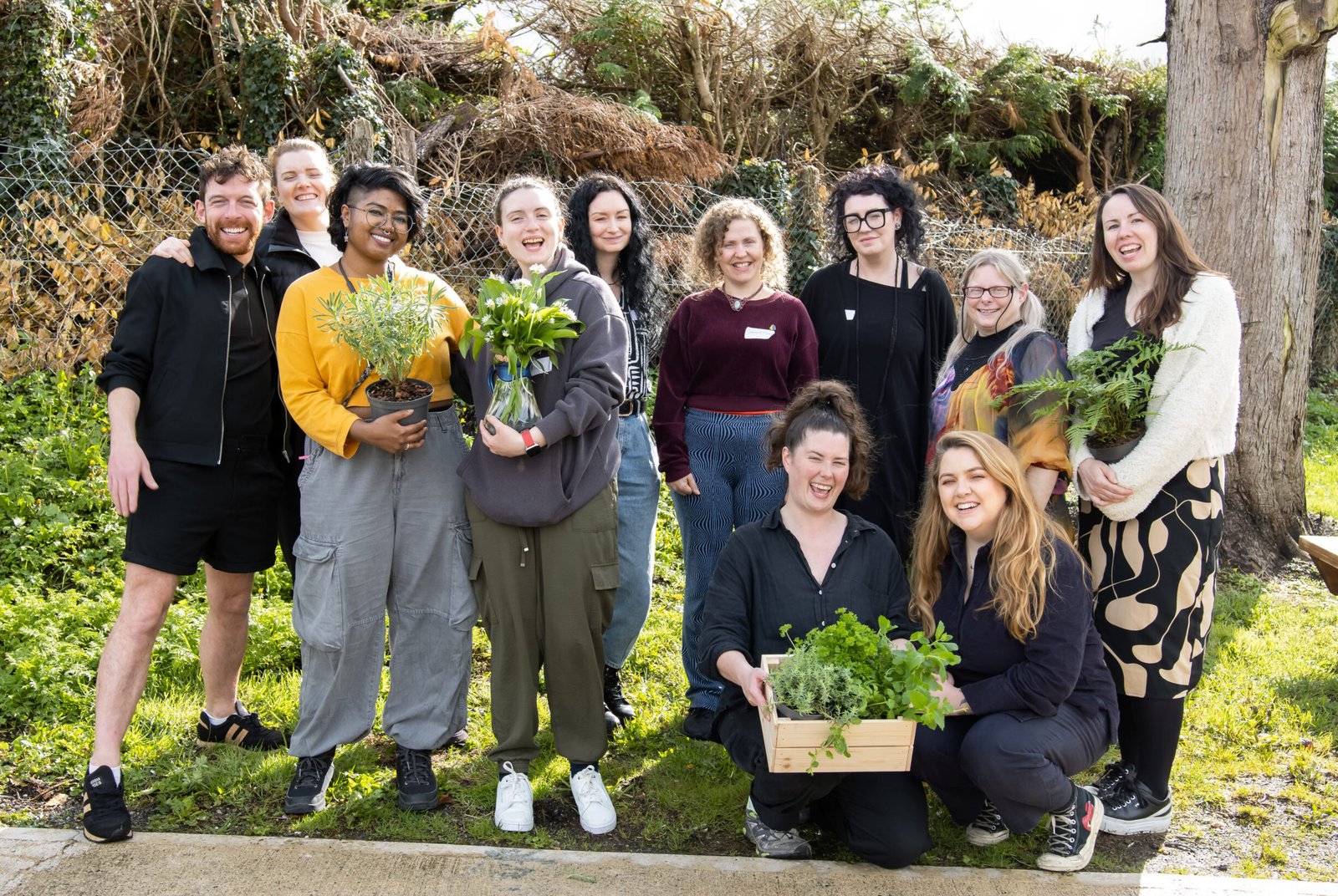
The Unmasking Nature project was developed through the work of Divergently Together – a shared-island creative community engagement project creating opportunities for disabled and neurodivergent communities to participate in climate action.
Climate change is a key issue of our time, and it disproportionately affects disabled communities. Lack of accessible information, physical vulnerabilities during extreme weather events, and increased sensitivity to heat waves due to the effects of medications are just some examples of eco-ableism frequently experienced by disabled people.
Divergently Together advocates for a just transition, bringing the lived experiences of neurodivergent and disabled people into conversations around climate action and bridging the gap between communities and the local authorities and organisations shaping climate policy and action. Through creative workshops, conversations and collaboration, the project highlights that people with lived experience of disability possess vital knowledge, skills and perspectives that can contribute to more accessible and inclusive approaches to climate action.
Funded by The Creative Climate Action fund, 2024 – 2025, an initiative from the Creative Ireland Programme with Shared Ireland funding by the Department of Tourism, Culture, Arts, Gaeltacht, Sport and Media in collaboration with the Department of the Taoiseach and The Taighde Éireann – Research Ireland Discover Programme, 2025 – 2026.